

Key Points on Long-Term Storage of Ion Exchange Resins
-
Shelf Life and Duration:
-
Industrial water treatment resins generally can be stored up to 5 years without significant deterioration.
-
Resins for power, ultra-pure water, drinking water, catalysis, and nutrition applications typically have recommended storage times of 2 to 3 years.
-
Inert resins may be stored up to 8 years.
-
Some sources suggest a general "rule of thumb" of 2 to 5 years for safe storage without chemical or physical degradation.
-
-
Storage Conditions:
-
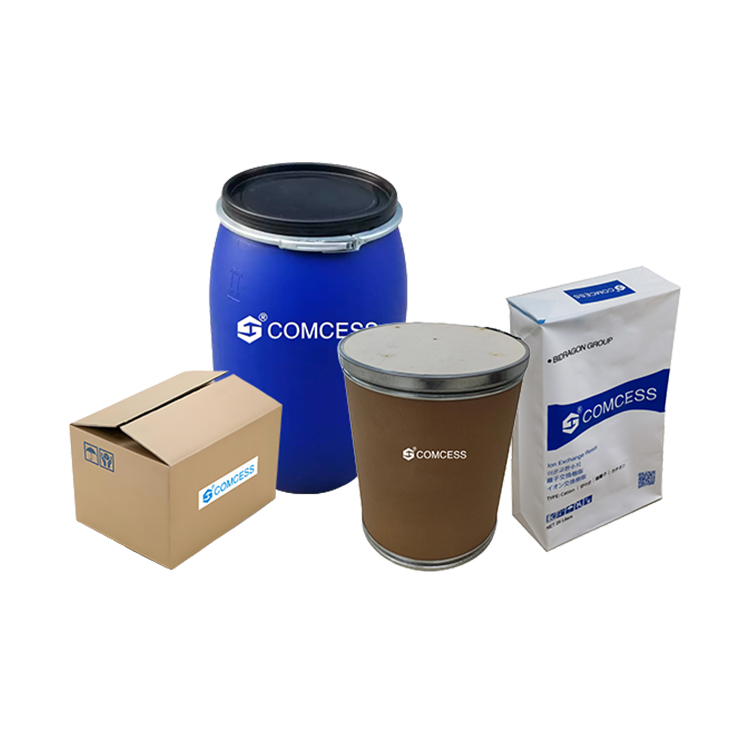
Store resins in their original, unopened packaging if possible.
-
Keep in a cool, dry place with ambient temperatures ideally between 5°C and 40°C (41°F to 104°F), avoiding freezing and excessive heat.
-
Avoid exposure to direct sunlight, oxidants, and impurities.
-
Protect from moisture loss to prevent resin bead dehydration and physical damage.
-
If stored in cold climates, avoid repeated freeze-thaw cycles as these can physically damage resin beads.
-
-
Form of Resin for Storage:
-
Salt forms (neutral pH) of resins store better than hydrogen (H) or hydroxide (OH) forms.
-
For long-term storage, strong acid and strong base resins should be converted into their salt forms to maintain stability. Weak acid/base resins can also be converted to salt forms.
-
-
Handling After Storage:
-
Before putting long-stored resin into service, it is recommended to rehydrate the resin slowly, often by soaking in salt water, to restore swelling and release occluded air.
-
If resin has dried out, gradual rehydration in brine solution is advised to avoid bead cracking.
-
-
Biological Considerations:
-
Long-term storage may lead to bacterial growth; storing resins in biological inhibition solutions like concentrated NaCl brine can minimize this risk.
-
Ion exchange resins can be stored long term—generally from 2 up to 5 years or more—without significant loss of performance if kept in proper conditions: cool, moist (hydrated), protected from freezing, sunlight, and contamination, and preferably in their salt form. Proper packaging and controlled environment storage are crucial to maintaining resin quality over time. Before use, rehydration and conditioning are recommended to restore resin properties fully