

Ion exchange resins are a highly dynamic and creative technology for applications in the food and fermentation industries. With their unique ion exchange function, they can accurately carry out exchange reactions with ions in solution, thus realizing the separation and purification of substances and other operations. In the food industry, ion exchange resins play a pivotal role as people's concern for food safety and quality grows.
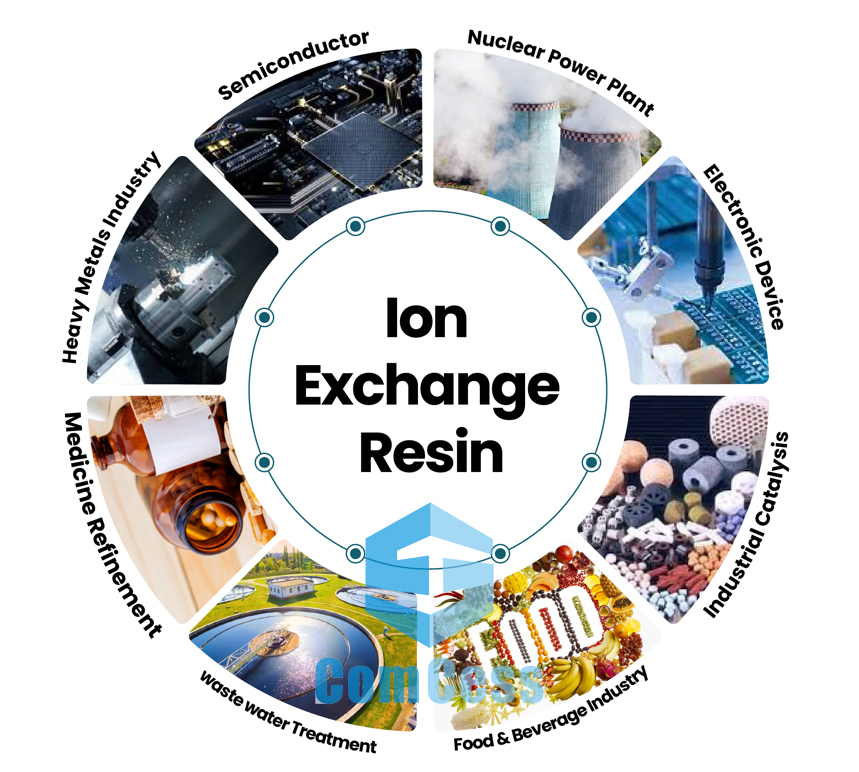
Nowadays, consumers have strict requirements for food safety, hygiene and non-toxicity, which prompts the food industry to constantly seek more advanced technology to improve product quality. Ion exchange resins have become one of the key technologies to meet this demand due to their high efficiency, safety and other characteristics, and their application in the food industry has become more and more widespread.
Purification And Treatment Of Drinking Water
Removal of harmful substances: At a time when agriculture is using large amounts of chemical fertilizers, many surface waters and groundwaters contain increased levels of nitrates, nitrites, perchlorates and other harmful substances. Nitrate will be reduced to nitrite under specific conditions, which may lead to methemoglobinemia; high concentration of sulfate will affect the taste of water and even produce laxative effect. Ion exchange resin can effectively remove these harmful substances in tap water and drinking water to ensure safe drinking water.
Softening and de-alkalization: Through ion exchange resin treatment, drinking water and domestic water can be softened and de-alkalized. This not only improves the taste of the water, but also prevents the health risks associated with problems such as hard water, for example, by reducing potential triggers for diseases such as stones.
Preparation of pure water and mineral water: Ion exchange resins can be used to prepare pure water and mineral water that meet high standards. In the preparation of purified water, it can deeply remove the impurity ions in water; in the preparation of mineral water, it can remove the harmful ions on the basis of retaining the beneficial minerals, so as to meet the needs of different consumers for drinking water.
Decolorization Of Products In Food And Fermentation Industry
Application scope: Ion exchange resin is widely used for decolorization in food and fermentation industry. In sugar, it can be used for decolorization of starch sugar; in alcohol, beer, liquor and other brewing processes, it can remove impurities that affect the color; in the field of sugar alcohols, sorbitol, mannitol, xylitol and other production, it can effectively improve the appearance of the product; in the production of organic acids, such as glutamic acid, citric acid, lactic acid and so on, it also relies on the ion exchange resins to enhance the color of the product.
Function: Through the decolorization treatment of ion exchange resin, it can significantly improve the purity of the product, make the appearance of the product clearer and more transparent, and enhance the competitiveness of the product in the market. For example, alcohol products with better color are often more popular among consumers.
Desalting And Purification Of Fruit Juices And Beverages
Removal of impurities: In the production of fruit juices and beverages, ion exchange resins can effectively remove impurities such as ammonia, sulfate, acids and other salts. The presence of these impurities may affect the taste, stability and shelf life of the beverage.
Optimized composition: The removal of impurities optimizes the composition of the beverage, improving stability and safety. For example, the reduction of acids and salts reduces the corrosion of beverages on packaging materials, extends shelf life and also improves taste.
Flavor Removal and Taste Improvement
Elimination of undesirable flavors: In drinking water, fruit juices, beverages and other products, there are often bitter, astringent and other undesirable flavors. Ion exchange resins can effectively remove these undesirable flavor substances and improve the flavor quality of products.
Adjustment of taste: By removing odor and adjusting the composition, ion exchange resin can improve the taste of the product, make it more in line with consumer taste preferences, and enhance the market acceptance of the product.
Application Advantages And Future Trends
Technical Advantages
Ion exchange resin has the advantages of high efficiency, safety and environmental protection in the application of food industry. Its exchange reaction is rapid, and can achieve better processing effect in a short time; in the application of food industry, the strictly screened and processed resin meets the food safety standards, and will not introduce harmful impurities; at the same time, compared with some traditional separation and purification methods, the use of ion exchange resin is more environmentally friendly, which reduces the large amount of use of chemical reagents and the emission of wastes.
Development Trend
With the continuous development of the food industry, ion exchange resins show great potential for expansion in functional foods, new beverages and other fields. For example, in the production of functional foods, ion exchange resins can be used to separate and purify components with specific functions; in the research and development of new beverages, the quality and taste of beverages can be further optimized to meet the needs of consumers for personalized and healthy food and beverages.
Ion exchange resins have multi-dimensional application value in the food industry. From the purification of drinking water to the decoloration, desalination and deodorization of food and beverage products, they play an irreplaceable role. Its application not only improves the quality and safety of products in the food industry, but also meets the needs of consumers for high-quality food. In the future, with the continuous progress of technology and the continuous development of the food industry, ion exchange resins will make a longer-term and more important contribution to the upgrading of the industry and the fulfillment of consumer demand.