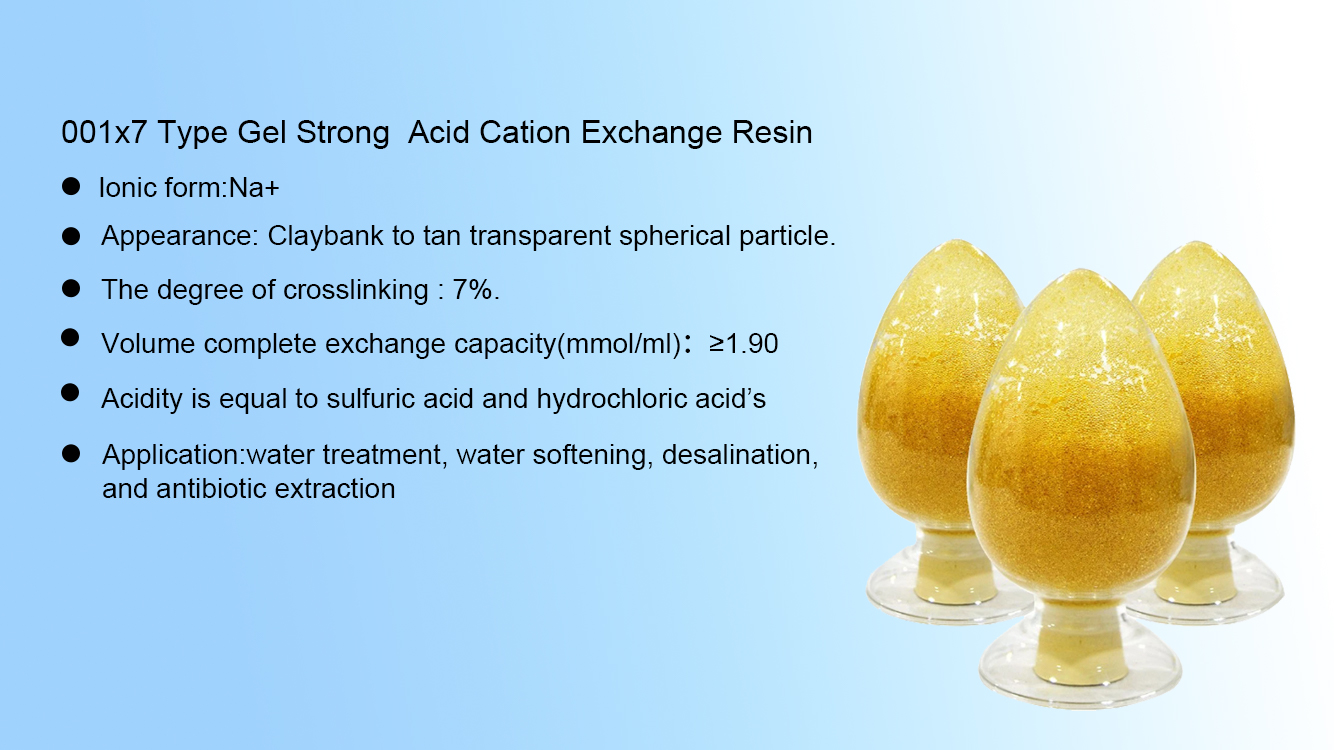
Ion exchange resin is an insoluble polymer material, usually copolymerized by styrene and divinylbenzene to form a three-dimensional network structure. This resin has high porosity and good chemical stability, so it shows excellent performance in the ion exchange process.
The main function of ion exchange resin is to remove dissolved ion pollutants in water by selectively exchanging ions in the solution through the active groups on its surface. According to the different active groups, ion exchange resins can be divided into cation exchange resins and anion exchange resins. Cation exchange resins are mainly used to remove hardness ions such as calcium and magnesium in water, while anion exchange resins are used to remove chloride ions and bicarbonate ions in water.
In boiler chemical, ion exchange resins are often used to soften water, that is, to remove hardness components (such as calcium and magnesium ions) in water to prevent boiler scaling and corrosion. For example, sodium-type softening resins reduce the hardness of water by replacing calcium and magnesium ions in water with sodium ions, making it suitable for high-pressure boilers. The application of ion exchange resins is not limited to water treatment, but also includes organic catalytic reactions, drying, purification, and separation of gases and liquids. In addition, ion exchange resins can also be used in food processing to help exchange or adsorb food ingredients.
In short, ion exchange resins are a versatile material that is widely used in industrial water treatment, organic synthesis, food processing and other fields. Its core function is to achieve selective removal and separation of ions in solution through ion exchange.