

Ion exchange resin is a type of material that is used to remove unwanted ions from a liquid. It is made up of tiny beads that have charged groups on their surface. These charged groups attract and exchange ions with the ions in the liquid.
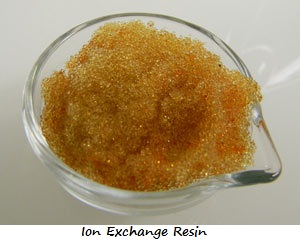
There are many different types of ion exchange resin, each with its own specific properties.
Some common types of ion exchange resin include:
Cation exchange resins: These resins remove positively charged ions (cations) from a liquid. They are commonly used to soften water, which means removing calcium and magnesium ions.
Anion exchange resins: These resins remove negatively charged ions (anions) from a liquid. They are commonly used to deionize water, which means removing all of the ions from the water.
Mixed bed resins: These resins contain both cation and anion exchange groups. They are used to produce ultrapure water, which is water that is free of all ions.
Ion exchange resin is used in a wide variety of applications, including:
Water treatment: Ion exchange resin is used to soften water, deionize water, and remove other contaminants from water.
Chemical processing: Ion exchange resin is used to purify chemicals, remove unwanted ions from process streams, and recover valuable metals.
Food and beverage processing: Ion exchange resin is used to purify sugar, juice, and other food and beverage products.
Pharmaceutical production: Ion exchange resin is used to purify pharmaceuticals and other bioproducts.
Nuclear power: Ion exchange resin is used to remove radioactive contaminants from water.
Ion exchange resin is a versatile and effective material that has many different applications. It is a valuable tool for purifying water, chemicals, and other liquids.