

Introduction
With the increasing demand for high purity water in various industries, Mixed Bed Resin (MBR), as a highly efficient ion exchange material, plays a vital role in industrial water treatment. Whether in the electric power, electronics, pharmaceutical or food and beverage industries, the wide application of Mixed Bed Ion Exchange Resin has effectively improved production efficiency and product quality. In this article, we will analyze the working principle of Mixed Bed Ion Exchange Resin and its main applications in different fields, and naturally introduce related keywords such as Edm Resin, Mixed Bed Resin, Wire Edm Resin, etc., to help you fully understand this important material.
What is Mixed Bed Resin?

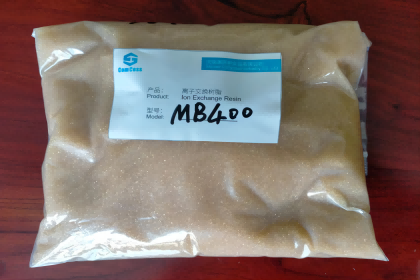
Mixed Bed Resin is a composite bed made by mixing a strongly acidic cation exchange resin with a strongly basic anion exchange resin in a ratio of approximately 2:3. While conventional deionization systems usually require separate cation and anion beds, Mixed Bed Resin mixes the two types of resins in the same vessel for more efficient ion exchange and water purification. Mixed Bed Resin comes in different forms depending on the application, such as Na-type cation resin for water softening and H-type cation resin for deionized water treatment.
How does Mixed Bed Resin work?
The efficient purification function of Mixed Bed Resin is due to its unique dual resin combination design, the main working process includes:
1. Ion Attraction
When water flows through the Mixed Bed Resin, cations (e.g. Ca²⁺, Mg²⁺) are adsorbed by the cation resins, and anions (e.g. Cl -, SO₄²-) are adsorbed by the anion resin.
2. Ion Exchange Reaction
The cation resin releases hydrogen ions (H⁺) and the anion resin releases hydroxide ions (OH-), which are exchanged with the pollutants in the water to produce pure water (H₂O).
3. Continuous Purification (Continuous Purification)
The process of double ion exchange results in a further improvement in water quality, capable of reaching extremely low conductivity levels, which is an important reason why Mixed Bed Ion Exchange Resin is irreplaceable in the preparation of ultrapure water.
Top 10 Applications of Mixed Bed Ion Exchange Resin in Various Industries
1. Power Industry
In power stations, boiler feed water and steam systems require extremely high water quality. Mixed-bed resin effectively prevents scaling and corrosion, prolongs the service life of the equipment, and ensures the efficiency of power generation.
2. Electronics Manufacturing
In the production of semiconductors and microelectronic devices, any trace of ionic impurities may lead to device failure. Mixed Bed Resin is widely used in the production of ultrapure water for cleaning, etching and process water.
3. Pharmaceutical Industry
Pharmaceutical production and equipment cleaning (CIP systems) are subject to strict water quality standards. Mixed Bed Resin ensures that the water quality complies with GMP and other international norms to ensure the safety of pharmaceutical products.
4. Food & Beverage Industry
In food processing, Mix Bed Resin helps to remove salts and impurities that affect taste and product quality, while ensuring that drinking water meets sanitary standards.
5. Laboratories and Research Institutions
Precision laboratory instruments such as spectrometers, analytical instruments, sterilization equipment, etc. have very high requirements for water quality, and the ultrapure water provided by Mix Bed Resin ensures the accuracy of experimental data.
6. Chemical Manufacturing
Many chemical synthesis reactions are extremely sensitive to ions in water. The use of Mixed Bed Ion Exchange Resin can effectively avoid the interference of impurities to ensure the consistency of the reaction and the high purity of the product.
7. Sterilization of medical equipment
Hospitals and medical institutions use Mixed Bed Resin to produce deionized water for the sterilization and cleaning of surgical instruments and diagnostic equipment, which meets strict health standards and ensures patient safety.
8. Metal Plating and Surface Treatment
The electroplating industry pays special attention to the uniformity and adhesion of the plating layer. The use of ultrapure water to treat metal surfaces effectively avoids plating defects and surface contamination.
9. Aquariums and Marine Systems
Salt water aquariums need to simulate the natural seawater environment. Mixed-bed resins can remove harmful ions, inhibit algae growth and maintain ecological balance.
10. Domestic & Commercial Water Treatment
Wire Edm Resin and Edm Resin are commonly used in home water purification systems and high-end car washes for end-of-line polishing of water to prevent the formation of water spots due to mineral residues in the water.
Key Benefits of Using Mixed-Bed Resins
Ultimate Purity: Effectively removes most of the dissolved ions from the water, making it ideal for applications requiring extremely high purity.
Simplified Process: Removes both cations and anions in a single treatment, saving space and costs compared to traditional twin-bed systems.
Stable water output: Highly efficient and continuous deionization capacity ensures stable operation of key processes in various industries.
Post-treatment polishing tool: as the last purification process of the ultrapure water system, to further ensure that the water quality reaches the best state.
Conclusion
Whether for large industrial facilities or domestic systems, Mixed Bed Resin has become an indispensable core material for water treatment due to its excellent ion removal capacity and wide range of applications. The right choice of high quality Mixed Bed Ion Exchange Resin not only optimizes the production process and improves product quality, but also gives you a head start in the competitive marketplace. In the future, as the demand for ultrapure water continues to grow, Mixed Bed Ion Exchange Resin will show strong vitality in more emerging fields.