

Sugars, or sweeteners, are products of plant photosynthesis that must be separated from accompanying impurities to be of great industrial value to the food industry. Conventional cleaning and purification methods can extract only 75-85% of the sugars from sugar-containing plants. Due to accompanying impurities, 10-20% of the sugar in molasses cannot be recovered.
Therefore, ion exchange purification of sugar-containing solutions has become an important topic in the application of ion exchange resins, which is an important method for partial or total recovery of sugar, and its application field has been extended to the whole sugar industry.
Generally speaking, the application principle of ion exchange resin in sugar industry can be divided into: ion exchange, catalysis, chromatographic separation, ion exclusion and adsorption of five categories, each of which can be divided into several subclasses for different purposes.
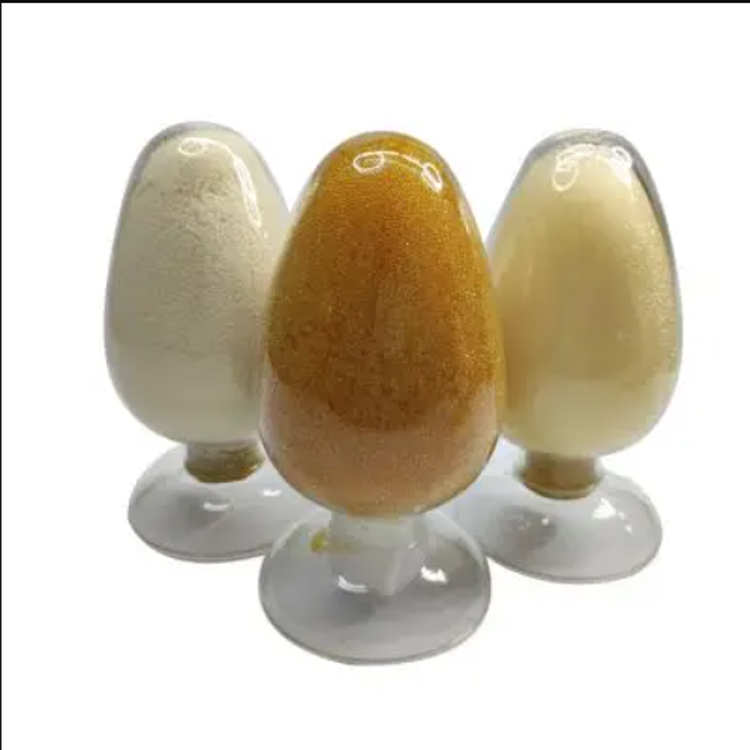
1. High purification of sugar solution
The use of strong acid cation resin and weak base anion exchange resin, can remove almost all the non-sugar impurities from the crude sugar solution, to achieve the purpose of almost complete purification. This method of inorganic substances and pigments removal rate is very high, most of them are more than 95%, the removal rate of nitrogen compounds is also more than 70%. The treated sugar solution can be concentrated into high quality syrup products or boiled refined sugar.
2. Decalcification and softening of sugar solution
Diluted sugar juice in the lime clarification process will increase the calcium content, reduce the purity of sugar solution, and in the sugar solution evaporation and concentration, causing serious scaling problems. Diluted sugar juice can be treated with a sodium-type cation exchange resin to remove the calcium and magnesium salts to reduce scale formation in the evaporation tank, also known as sugar juice softening. If the sugar juice (clear juice or syrup) treated with sodium resin and then treated with strong alkaline resin, the color value of the sugar juice can be reduced by 60-70%, purity improvement, waste honey yield reduction.
Decolorization is a key step in the process of syrup refining, ion exchange resin can replace bone charcoal or activated carbon from sucrose, starch sugar, xylose and other refined sugar solution to remove the color value, turbidity and insoluble impurities, and has a high capacity for adsorption, color value, turbidity and insoluble impurities removal ability, can be reused features.